

Western Region Dominates Junior School KSEF 2026: 550 Points and Counting
Western Region Dominates Junior School KSEF 2026: 550 Points and Counting
Published: April 4, 2026 | Reading Time: 7 minutes
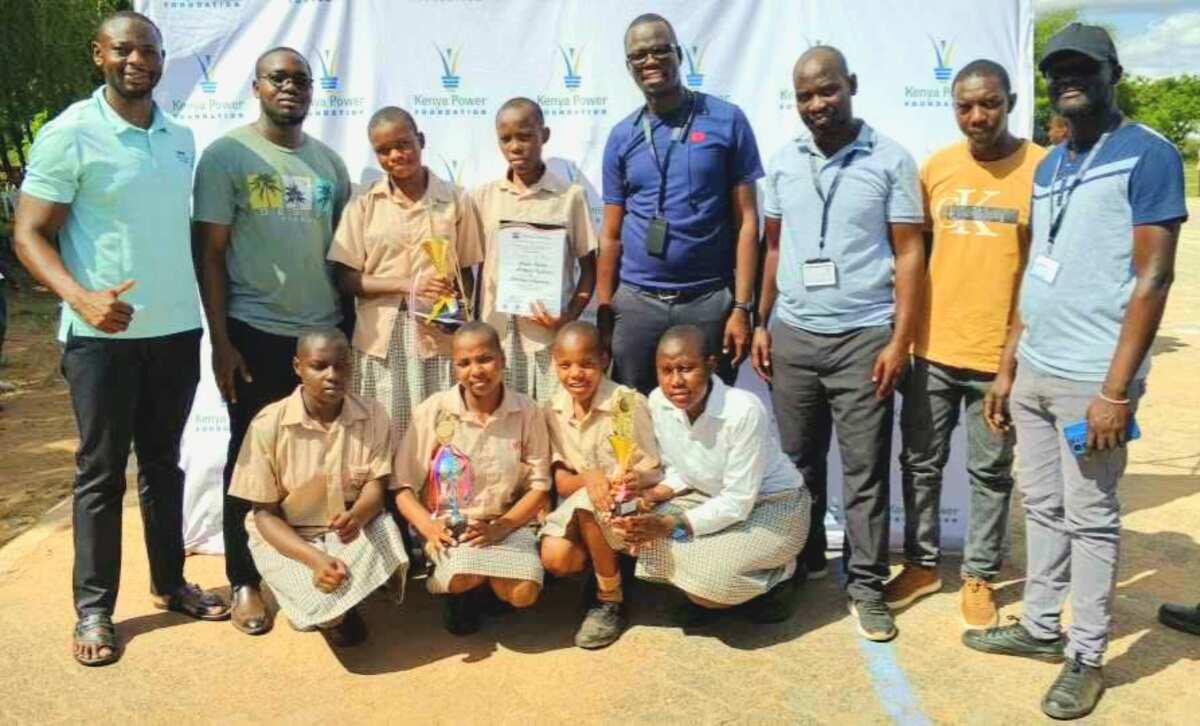
Western Region has emerged as the strongest performer in the Junior School category at the 62nd Kenya Science and Engineering Fair (KSEF) National Finals, held at Garissa High School from March 29 to April 5, 2026. The region accumulated 550.000 cumulative points across all six Junior School categories, outperforming Rift Valley (501.000 points) and Nyanza (481.000 points).
This achievement reflects years of investment in STEM education at the county level, strong teacher mentorship programs, and active participation in regional science competitions that prepare learners for the national stage.
If you are an educator, parent, or school administrator in Western Region or anywhere in Kenya, this analysis offers practical insights into what worked, which schools led the way, and how other regions can learn from this success.
Regional Standings: Junior School Overview
Rank | Region | Total Points |
|---|---|---|
1 | Western | 550.000 |
2 | Rift Valley | 501.000 |
3 | Nyanza | 481.000 |
4 | Central | 435.000 |
5 | Eastern | 434.000 |
6 | Coast | 400.000 |
7 | Nairobi | 270.000 |
8 | North Eastern | 106.000 |
Western Region’s lead was built on consistent performances across multiple categories, with schools from Bungoma, Kakamega, and Vihiga counties contributing significantly to the regional total.
Top Performing Junior Schools from Western Region
Biliso Junior School – 63.000 Points
Biliso JS led Western Region schools with strong showings in two categories:
- Biological and Environmental Science: “Smart Fire Management Kit” – 59.750 points (1st place nationally)
- Technology and Engineering: “Electronic Class Register and Attendance Monitoring System” – 49.917 points (2nd place nationally)
The school’s projects addressed practical community challenges: fire safety in rural settings and digitizing school administration. Teachers at Biliso emphasized learner-centered project development, allowing students to identify local problems and design solutions using locally available materials.
Mwira Junior School – 52.000 Points
Mwira JS demonstrated strength in applied technology:
- Agriculture: “Water Level Monitoring System” – 45.250 points (6th place)
- Technology and Engineering: “Passive Infrared Motion Detector Security Alarm” – 46.167 points (8th place)
Both projects focused on resource management and security, issues relevant to many rural Kenyan communities.
Nyange Pag Junior School – 32.000 Points
Nyange Pag JS secured the top position nationally in Social and Behavioural Science with “Total Value Machine,” scoring 59.083 points. The project explored mathematical applications in everyday commerce, demonstrating how abstract concepts can solve tangible problems.
Other Notable Western Region Schools
School | Total Points | Notable Project | Category | National Position |
|---|---|---|---|---|
Mundika Special | 31.000 | The Smart Farmer’s Shape Using Geometry | Mathematical Science | 2nd |
Ebubole JS | 30.000 | Aphid Control Using Worm Wood | Social Science | 3rd |
Bungoma Deb JS | 26.000 | Automated Passenger Vehicle | Energy and Transportation | 7th |
Kanduyi Deb JS | 26.000 | Hydraulic Robotic Arm | Technology and Engineering | 7th |
Shibuye JS | 27.000 | Making Dandruff Treatment Using Locally Available Materials | Biological Science | 6th |
What Made Western Region’s Projects Stand Out
Judges at KSEF 2026 evaluated projects based on innovation, scientific rigor, clarity of presentation, and real-world applicability. Western Region’s top projects shared several characteristics:
Community relevance
Winning projects addressed challenges familiar to learners’ immediate environments, such as fire safety, pest control, attendance tracking, and agricultural efficiency. This grounded approach helped students articulate clear problem statements and measurable outcomes.
Use of locally available materials
Many projects avoided dependence on expensive imported components. For example, Biliso JS’s fire management kit used sensors and alarms that could be assembled with materials accessible in rural hardware stores.
Strong mentorship structures
Teachers from Western Region schools reported regular participation in county-level STEM clubs, inter-school science fairs, and mentorship from university partners. These structures provided learners with feedback loops before the national competition.
Integration across subjects
Top projects often blended concepts from multiple disciplines. Mundika Special’s geometry-based farming project combined mathematics, agriculture, and land-use planning, reflecting the interdisciplinary nature of real-world problem solving.
How Other Regions Can Learn from Western’s Approach
While every region has unique strengths and constraints, several strategies from Western Region are adaptable nationwide:
- Start early: Schools that began project development in Term 1 had more time for iteration and testing.
- Leverage local expertise: Inviting agricultural officers, health workers, or engineers to mentor learners added practical depth to projects.
- Document the process: Judges valued clear records of hypothesis, methodology, data collection, and reflection, not just the final product.
- Practice presentation skills: Learners who rehearsed explaining their projects to peers, parents, or community members performed more confidently during judging.
County education offices can support these practices by organizing pre-KSEF workshops, facilitating teacher exchanges, and providing modest grants for prototype materials.
Looking Ahead: Preparing for KSEF 2027
The Ministry of Education has indicated that KSEF will continue to expand Junior School participation under the Competency-Based Education framework. Schools planning for next year’s competition can begin now by:
- Identifying learner interests through classroom discussions or surveys
- Connecting projects to CBC learning areas and core competencies
- Establishing simple documentation habits, including photos, notes, and data logs
- Partnering with local institutions for technical guidance or resource sharing
Teacher.co.ke will continue to share free planning templates, judging rubrics, and mentorship guides to support educators across Kenya.
Download Full Results
All data in this article is sourced from the official KSEF 2026 ranking reports released at Garissa High School.
Stay Updated
Subscribe to Teacher.co.ke for email alerts on:
- International selection updates for KSEF 2026 winners
- STEM grant opportunities for schools
- Free lesson plans inspired by KSEF-winning projects
- Regional qualifiers and preparation guides for KSEF 2027
Article verified against official KSEF 2026 results documents. Last updated: April 5, 2026, 5:15 PM EAT. For corrections or school inclusion requests, contact editorial@teacher.co.ke